Voice frequency
Voice Frequency in Hz
Voice frequency is how fast your vocal folds vibrate while you speak, measured in hertz (Hz). A lower number sounds deeper. The free Voice Hz Test measures yours in the browser — nothing is uploaded — and the table below compares famous voices. Read how we measure before treating a number as exact.
Average voice frequency for men and women
Speaking frequency is a range, not a single note. Published speech research — the same figures the Voice Hz Test compares you against — puts typical voices here.
Men
Most adult men speak between roughly 100 and 140 Hz, averaging about 120 Hz. A wider common span is about 85–180 Hz. Under about 95 Hz sounds distinctly deep.
Women
Most adult women speak between roughly 185 and 235 Hz, averaging about 210 Hz. About 165–255 Hz is still common. Under about 165 Hz reads as notably deep and warm.
Reference averages from published speech-science research on speaking fundamental frequency (Fitch & Holbrook, 1970; Baken & Orlikoff, Clinical Measurement of Speech and Voice). These are speaking ranges, not singing voice types.
Famous voice frequencies
Estimated median speaking frequency from public recordings, deepest first. Same measurement as the test: median fundamental frequency over voiced frames.
| Voice | Category | Estimated median | Typical range | Confidence |
|---|---|---|---|---|
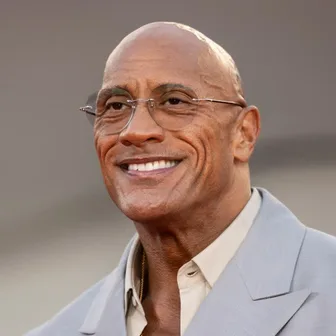 Dwayne Johnson | Actor | ~99 Hz | 83–135 Hz | A |
 Morgan Freeman | Narrator | ~113 Hz | 90–161 Hz | B |
 Kevin Hart | Actor | ~120 Hz | 101–168 Hz | A |
Whose voice is yours closest to?
The Voice Hz Test records ten seconds in your browser and reports your median frequency in Hz — the same measurement behind the table — then names the famous voices nearest to yours. Nothing is uploaded.
Test your voiceHow training changes speaking pitch
Speaking pitch responds to training within a natural range. Most people talk a little above their resting pitch, and breath support, a relaxed larynx, and resonance practice can lower and steady that habit over weeks. Most people can move their habitual pitch by a few semitones; no exercise turns a 140 Hz voice into an 85 Hz one. Deeper's daily exercises target the trainable part and track one voice score a day, so the next measurement can show whether the work moved the number.
FAQ
Voice frequency, explained
What is voice frequency?
Voice frequency is the fundamental frequency (F0) of speech: how many times per second your vocal folds vibrate, measured in hertz (Hz). A voice at 120 Hz vibrates 120 times a second. Lower frequency sounds deeper. The number people mean is the median over ordinary speech, not a singing high note.
What is the average voice frequency for men and women?
Published research places average speaking frequency around 120 Hz for adult men and around 210 Hz for adult women. Most men speak between roughly 100 and 140 Hz, and a wider common span is about 85–180 Hz. Most women speak between roughly 185 and 235 Hz, with about 165–255 Hz still common. These are speaking ranges, not singing voice types. Source: Fitch & Holbrook, 1970; Baken & Orlikoff, Clinical Measurement of Speech and Voice.
How do I measure my voice frequency in Hz?
Use the Voice Hz Test, an in-browser Hz tester. Speak for ten seconds in a quiet room and it reports the median pitch of that sample in hertz, plus where it sits against typical ranges. Nothing is uploaded. Pitch shifts with time of day, energy, and context, so treat the number as a snapshot and retest at a consistent time if you want a baseline.
What is voice hertz?
The same measurement, named by its unit. Hertz counts cycles per second, so voice hertz is how fast the vocal folds vibrate during speech. "What is my voice frequency in Hz?" and "what is my voice hertz?" are the same question — the Voice Hz Test answers both with one median number.
Can training change my voice frequency?
Within a natural range, yes. Speaking pitch is partly habit: most people talk a little above their resting pitch. Breath support, a relaxed larynx, and resonance practice can lower and steady a speaking voice over weeks. Most people can move their habitual pitch by a few semitones; no exercise turns a 140 Hz voice into an 85 Hz one. Deeper's daily exercises target that trainable part and track one voice score a day.
All figures are independent estimates measured from publicly available recordings. Deeper is not affiliated with, sponsored by, or endorsed by any person listed. No audio is hosted or redistributed — recordings are measured, cited, and discarded.